Stories. Questions. Different perspectives.
Browse WAURE
← Advice & Questions
Politics · Advice & Questions ·

If a poll is 'within the margin of error', does that mean the candidates are tied?
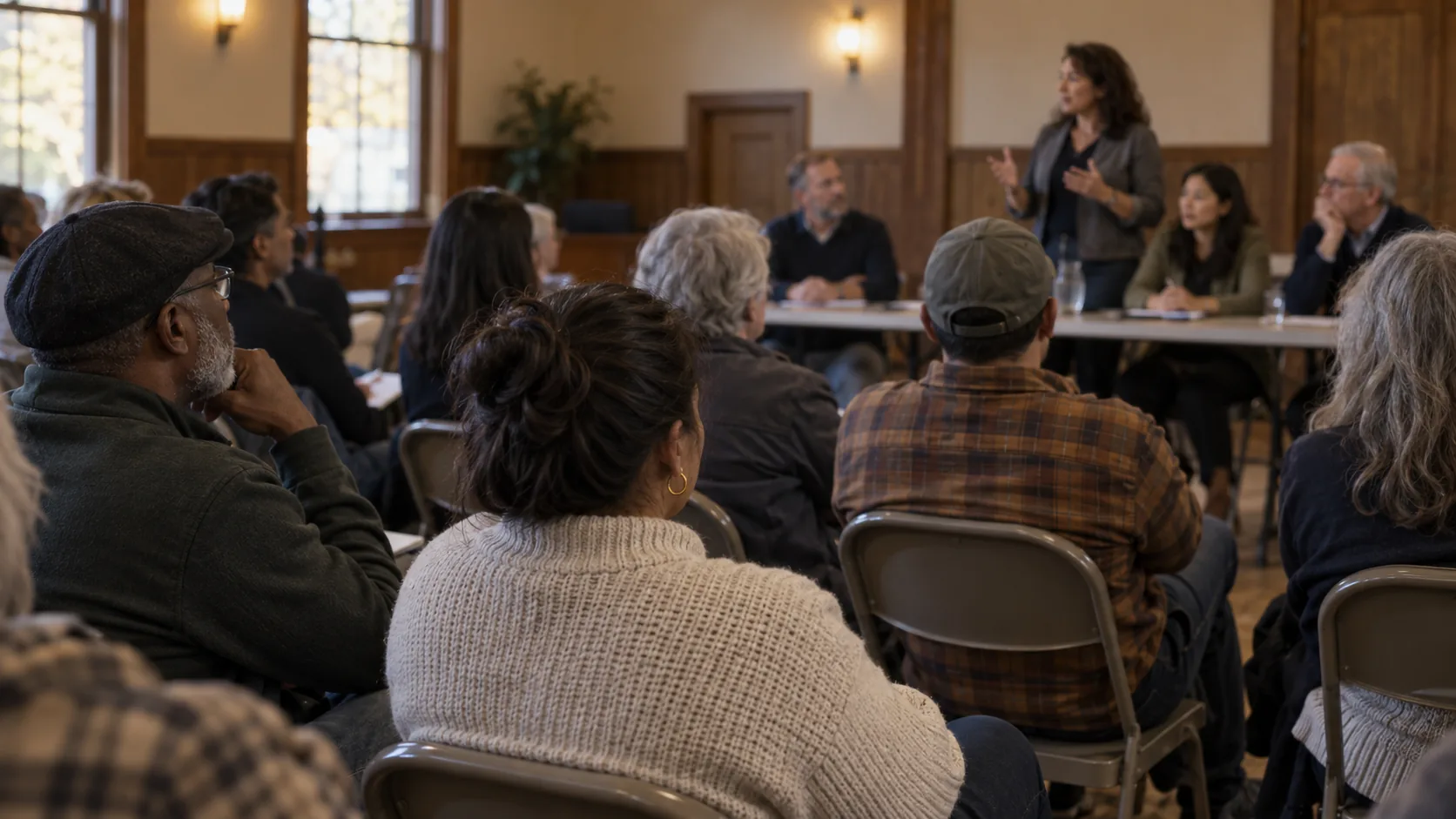
Politics category photographPolitics

The practice graphic shows 48% for one candidate and 46% for another, with a margin of sampling error of plus or minus three percentage points for each estimate. These are illustrative figures, not a current poll.

My friend wants our class caption to say the candidates have equal support. I said the reported numbers aren't equal. She thought I was insisting the first candidate must really be ahead. That isn't what I meant either.

The Pew Research Center explanation distinguishes uncertainty around one estimate from uncertainty around the gap between candidates. I don't think I can settle this by subtracting three from whichever number suits my argument.

What would an accurate caption say about the observed difference, the uncertainty, and what this example cannot establish?

Discussion

5 community replies

The estimates differ by two percentage points. That doesn't establish that the underlying support differs, and uncertainty doesn't establish exact equality either. Pew explains that assessing the gap requires the uncertainty for that difference, rather than just applying the reported margin for one candidate.

For a real poll, read the methods before using its margin. What population was surveyed, how was the sample drawn, and which estimate does the stated uncertainty describe? A number copied from a graphic can't answer those questions.

AAPOR's guide also distinguishes sampling error from other possible errors, such as nonresponse and turnout modelling. A margin of sampling error isn't a guarantee that all uncertainty has been captured inside a fixed boundary.

I'd avoid a caption that sounds like a prediction of equal chances of winning. Even describing current support as too close to distinguish doesn't make the election a precisely fifty-fifty event.

Yes. Keep the caption on what the illustrative poll measures: different sample estimates with uncertainty around their difference. A probability of winning would be a different claim needing a forecasting method, not a new label you can extract from these two percentages.

Join the discussion

More in Politics