Our florist followed my mood board and I realized my mood board was wrong
 Weddings
I asked our florist for “wild, loose and colorful.”
She heard “bright meadow.”
I meant “slightly less symmetrical than a grocery-store bouquet.”
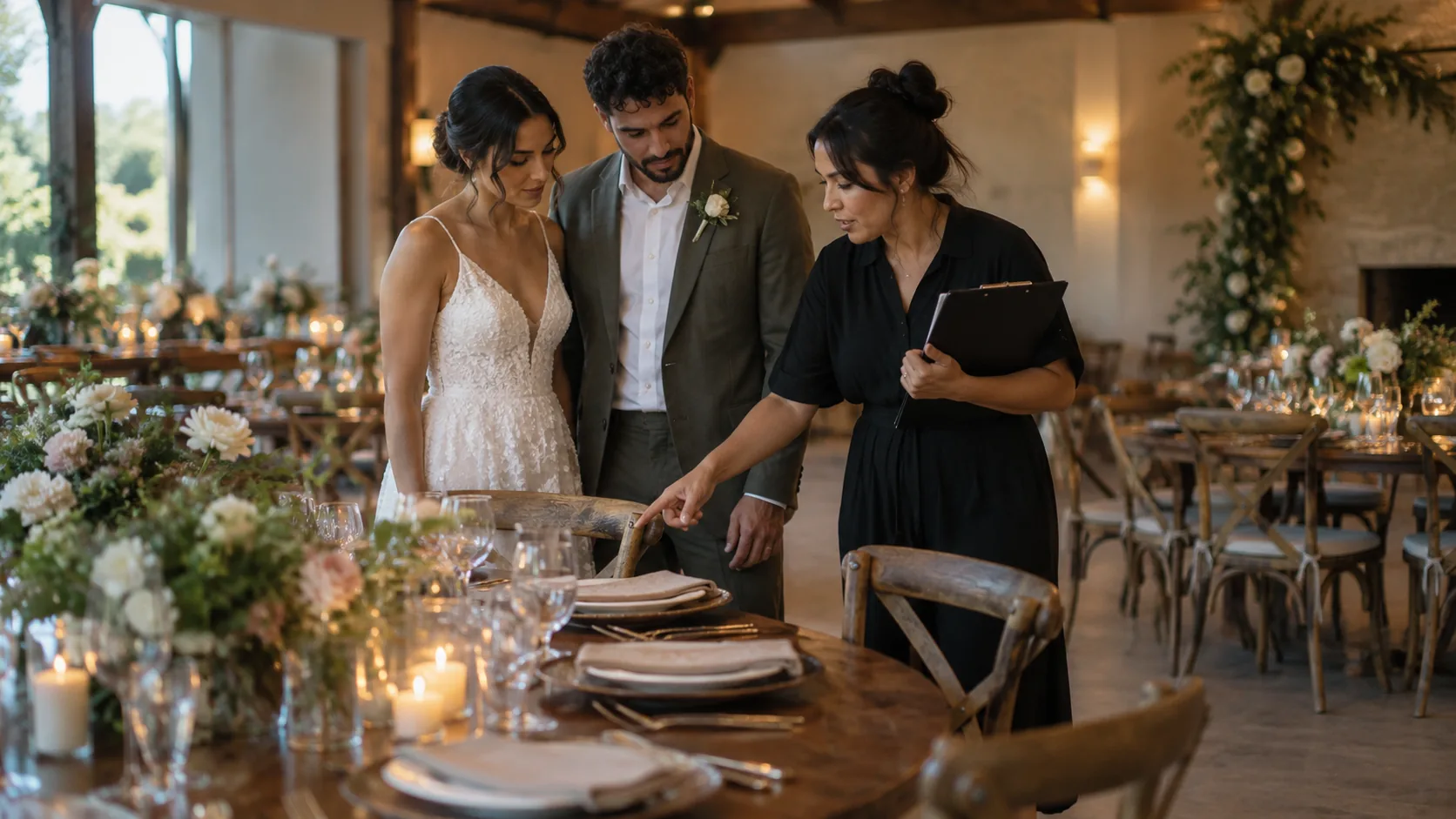
We discovered the difference during the floral preview.
The centerpiece on the table contained orange poppies, purple flowers I could not identify, tall grass and one branch that extended toward my mother like it had a question.
It was beautiful.
It was not our wedding.
My fiancé looked at me and waited. I said, “Wow.”
The florist heard approval.
That was my mistake.
I was trying to be polite while I organized my reaction. By the time I said the colors were stronger than I expected, she had begun explaining how the arrangements would vary naturally from table to table.
My mother loved them. She said the flowers finally gave the room personality.
Our room apparently did not have enough personality before it acquired grass.
The florist pulled up the inspiration images I had sent. They did include orange, purple and asymmetrical arrangements. On my phone, I had focused on the airy shapes and ignored how much color was carrying them.
She had followed the brief.
I had written the wrong brief.
What I actually want is mostly white and green with a few muted colors, movement around the edges and nothing that appears to be growing toward a guest’s plate. That is much more specific than “wild.”
Changing direction is possible, but not free. Some flowers were ordered based on the approved palette, and the florist says a complete redesign would involve additional planning and substitutions.
She offered a smaller change: reduce the orange, lower the tallest pieces and use more green. The result would still be colorful, just quieter.
My fiancé prefers that option. He thinks the preview did its job by revealing the mismatch early enough to adjust it. He also thinks I may be reacting to the shock of seeing a full arrangement after months of tiny images.
I may be.
We brought the sample into the room for ten minutes. Against the neutral tables, it looked less aggressive. From across the space, the color helped the centerpieces exist rather than dissolve into the linens.
Up close, I still disliked the orange.
My mother keeps saying guests will remember the room feeling alive, not whether one flower matched my mental picture. She is probably right and also far too invested in the survival of the orange poppies.
The hardest part is speaking to the florist without implying that she failed. I want to say, “You delivered the brief accurately, and I learned that the brief was wrong.” That is the truth. It also means the cost of correction belongs mostly to us.
I have started assembling a new set of images with notes about what I like in each one: shape, density, height, palette. It is much less romantic than a mood board and much more useful.
We need to decide whether to pay for a full palette change or accept the adjusted version. The money matters, but so does trusting my own reaction. Wedding planning contains endless warnings not to chase perfection. Sometimes that advice makes it hard to recognize a fixable mistake.
Would you revise the palette completely, take the quieter adjustment or wait to see a second small sample? How do you correct a vendor who followed your words when the real failure was that your words did not mean what you thought they meant?