My parents planned a receiving line for us and I want thirty minutes alone
 Weddings
My parents have become emotionally attached to a receiving line that does not exist.
They mention it as if it were already printed on the schedule.
“We’ll see them in the receiving line.”
“Save that conversation for the receiving line.”
“Your aunt can stand near us in the receiving line.”
My fiancé and I have never agreed to have one.
Our ceremony and reception are in the same place. After the ceremony, guests will move into a courtyard for drinks while the room is reset. We planned to take immediate-family photographs for about twenty minutes, then spend the rest of cocktail hour alone in a small room eating the appetizers we are paying for and seeing each other without an audience.
That private half hour has become one of my favorite parts of the plan.
My parents think it is rude.
They want us to stand at the courtyard entrance with both sets of parents and greet every guest as they come through. My mother says it is the only reliable way to thank people individually. My father says guests are traveling and should not have to chase the couple around the reception for a greeting.
Those are reasonable points. A hundred and twelve people are coming. If we rely on table visits, dancing and chance, we may miss someone.
The problem is that a receiving line would consume most of cocktail hour even if every conversation were brief. It would also put our divorced parents in one visible row.
My parents can behave politely together. My fiancé’s parents are less predictable. His father’s wife does not want to stand beside his mother. His mother does not want the wife included at all. What my parents describe as a graceful tradition looks, from our side, like arranging four adults by rank and asking guests to observe the result.
My fiancé suggested that only the two of us greet people. My mother said excluding parents defeats the purpose.
That sentence revealed that we may not agree on the purpose.
To us, greeting guests is about connection. To my parents, the line also recognizes the families hosting the wedding. They are contributing some money, though we are paying most of the cost. They have friends attending whom we do not know well and want the chance to welcome them formally.
I asked whether my parents could greet their friends independently during cocktail hour. My mother looked hurt and said, “So we just wander around while you hide?”
Hide is not how I would describe sitting in a room for thirty minutes after getting married. It is exactly how I intend to describe it from now on.
We considered standing at the ceremony exit for ten minutes and greeting people informally. That would create a bottleneck and still would not guarantee everyone passes us. We considered dismissing guests row by row, but our officiant warned that it would change the ending and take time.
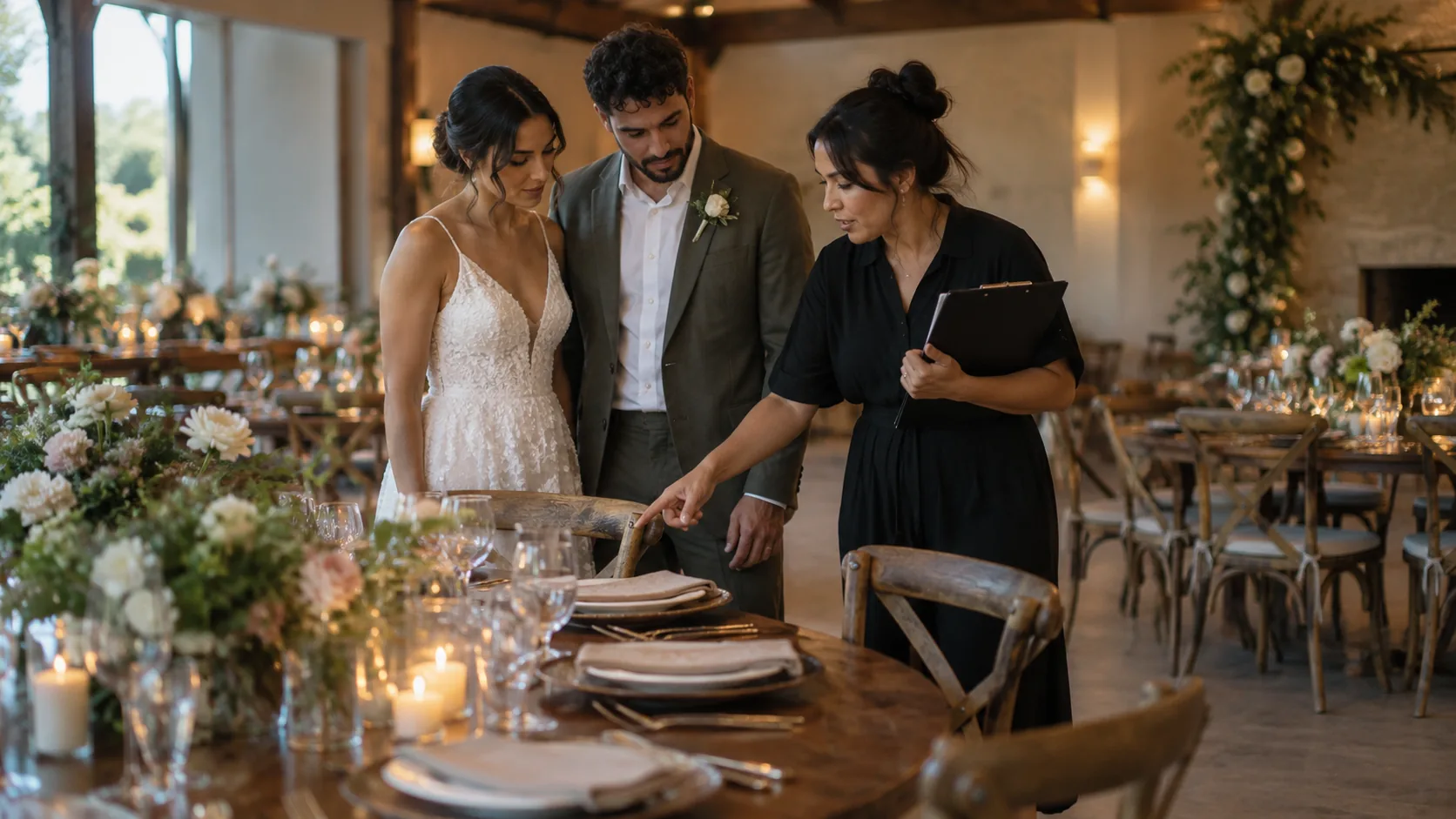
The most workable option may be a short welcome toast at dinner followed by visiting tables during the meal. We could give our parents their own welcome sentence and ask the event lead to keep us moving so no table is missed.
My father thinks table visits interrupt dinner and turn the couple into politicians.
He is not entirely wrong.
I notice that every option designed to greet 112 people contains some amount of assembly-line behavior. The real question is which trade-off we prefer: a line during cocktail hour, interruptions during dinner or accepting that a warm collective welcome may be enough.
There is also a selfish truth. I want the private break more than I want to guarantee a personal thank-you to every guest before dinner. I plan to write thoughtful notes afterward. I will speak to as many people as I can. I just do not want our first hour as a married couple organized around throughput.
Are we being poor hosts if we skip the receiving line and protect that break? What is the least mechanical way to make guests feel welcomed without surrendering the only private part of the day?